Mechanisms
Narrative exclusion, institutional fragility, market opacity, fragmented governance.
System Design
The architecture separates diagnosis from response: mechanisms produce coordination tax and drift; RSA and ALMA are designed to reverse that dynamic structurally.
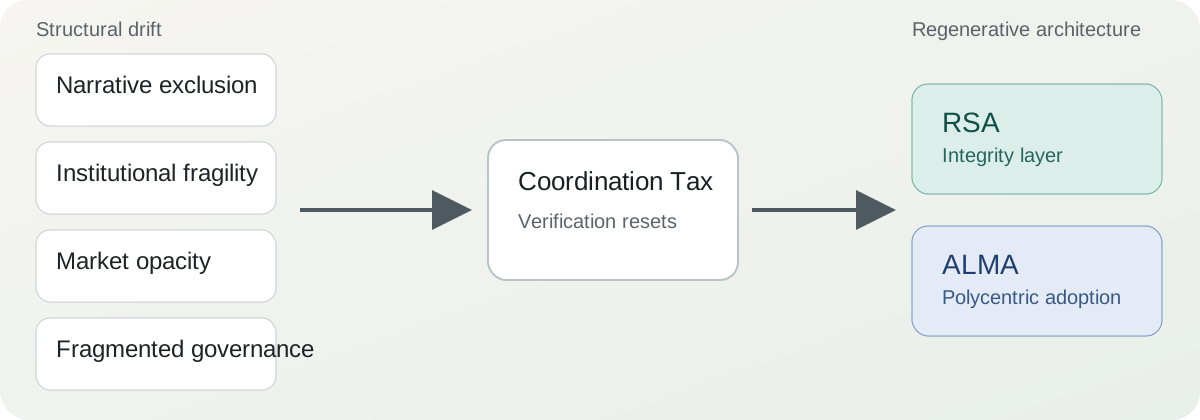
Narrative exclusion, institutional fragility, market opacity, fragmented governance.
Verification burden and risk premiums rise as shared references fail to persist.
Participation drops, trust resets, and coherence erodes across academia, institutions, and markets.
Append-only stewardship continuity with selective disclosure and reusable verification.
Polycentric coordination that diffuses procedural standards and aligns incentives.
The thesis separates objectives: architecture targets stabilization first (coherence, verification, legitimacy). Revaluation is treated as emergent and contingent, not the primary design target.